What Happens After You Apply for the Warm Homes Plan
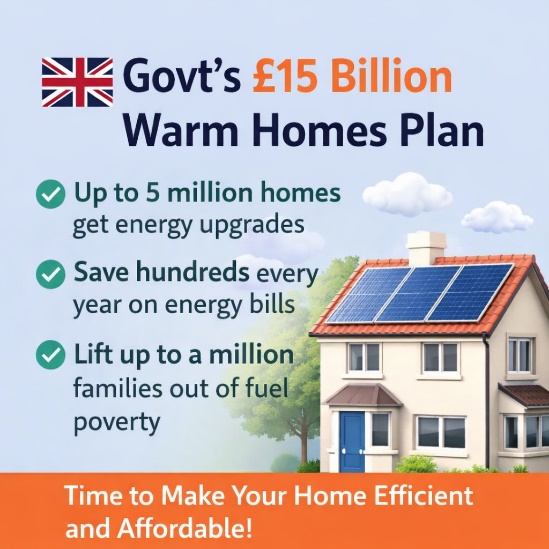
If you have successfully submitted your application for the Warm Homes Plan, you might be wondering what happens next.
Many homeowners expect the installation to begin immediately, but in reality, the process involves several important steps before any upgrades—such as insulation, heat pumps, or solar panels—can be installed.
Understanding this process can help you avoid confusion, prepare the required information, and ensure your home upgrade moves forward smoothly.
This guide explains how your application is reviewed, what confirmation steps occur before installation, and how to prepare while waiting.
Step 1: Application Verification by Your Local Council
After submitting your application, your details are typically sent to your local authority in England for verification. At this stage, the council will review your information to confirm that you meet the eligibility criteria for the Warm Homes Plan.
Step 2: Request for Supporting Documents
If the council requires additional verification, they may contact you to request supporting documents.
These may include:
- Proof of household income
- Benefit confirmation letters
- Property ownership documentation
- Rental agreement (if you are a tenant)
Providing accurate documents quickly can help speed up the approval process.
Step 3: Home Energy Assessment
Once your eligibility is confirmed, the next step is usually a home energy assessment.
During this stage, an approved assessor will visit your property to evaluate:
- Current insulation levels
- Heating system efficiency
- Roof suitability for solar panels
- Opportunities to improve energy efficiency
The purpose of this survey is to determine which upgrades will deliver the greatest improvement to your home’s energy performance.
Step 4: Upgrade Recommendation and Approval
After the home survey, a detailed recommendation is created for your property.
This report outlines:
- The most suitable energy upgrades
- Estimated installation scope
- Expected energy efficiency improvements
The council or programme administrators will then review the proposal and confirm whether funding is approved for your home.
Once this approval is granted, your project moves to the installation stage.
Step 5: Scheduling the Installation
After approval, the installation team will contact you to schedule the work. Applicants could be a lot therefore, planning and scheduling may therefore take several additional weeks.
Overall, to be short and clear:
After submitting your application, the process typically includes:
- Council eligibility verification
- Supporting document checks
- Home energy assessment
- Upgrade approval
- Installation scheduling
What Is the Best Way to Wait Before Installation?
It’s start to plan your home energy system. Use this waiting period to explore how renewable energy technologies such as solar panels and battery storage could further reduce their energy bills.
While insulation and heating improvements are important, many homes benefit most from an integrated home energy system.
This may include:
- Solar panels generating electricity
- Home battery systems storing excess energy
- Heat pumps using clean electricity
- Smart energy control systems optimising usage
Together, these technologies allow households to produce, store, and manage their own energy, significantly reducing reliance on the national grid.
If you have this demand, come to speak with Sunhome!
Sunhome specialises in integrated home energy systems designed for modern households. With over 10 years of experience in residential photovoltaic technology, Sunhome has delivered reliable energy solutions to more than 510,000 households worldwide.